

In brief
If you are experiencing symptoms of an enlarged prostate, it’s important to understand one of the most advanced treatment options available today.
Why Choose PAE Treatment?
While there are many treatment options for benign prostatic hyperplasia (BPH), interventional radiologists offer a modern, advanced approach:
Prostatic Artery Embolization (PAE)
This minimally invasive treatment:
- Involves significantly lower risk compared to surgery
- Causes less pain
- Allows for a faster recovery
For many patients, PAE provides a meaningful improvement in quality of life without the need for surgery.
Normal Prostate vs. Enlarged Prostate with Obstruction
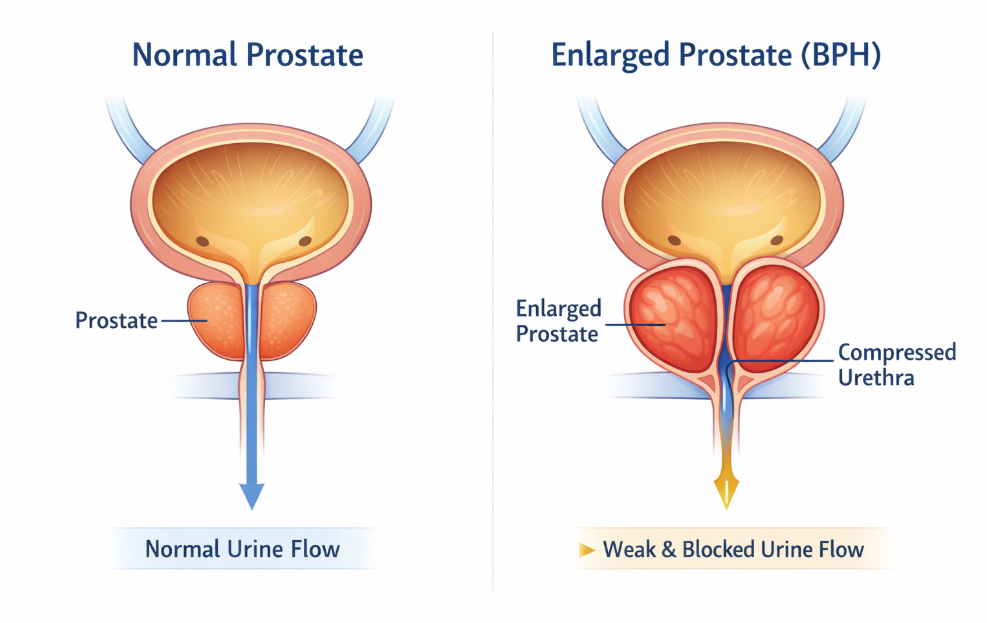
Using advanced imaging technology, tiny particles are injected to block blood flow to the prostate. This reduces its size over time and relieves urinary symptoms.
What to Expect After the Procedure
Most patients experience a relatively quick recovery following PAE.
Temporary side effects may include:
- Increased urinary frequency
- Mild burning sensation during urination
- Mild pelvic discomfort
- Occasionally, small amounts of blood in the urine
These symptoms are usually short-lived and resolve on their own within a few days.
Am I a Candidate for PAE?
If you’re dealing with symptoms of an enlarged prostate and want to avoid surgery, PAE may be an excellent option for you.
Schedule a Consultation
Find out if Prostatic Artery Embolization (PAE) is right for you.
Contact us today to schedule your consultation >>
Frequently asked questions
Is embolization painful?
In most cases, no. It is a minimally invasive procedure performed without major incisions.
How long is the recovery time?
Most patients can return to normal activities the same day.
Does this replace surgery?
In many cases, yes. especially when the main symptom is bleeding.
