

In brief
An enlarged prostate can lead to urinary problems and significantly impact quality of life.
Prostatic Artery Embolization (PAE) offers effective symptom relief without surgery and without affecting normal function.
What is an Enlarged Prostate (BPH)?
Benign Prostatic Hyperplasia (BPH) is a non-cancerous enlargement of the prostate gland, located below the bladder and surrounding the urethra.
It is extremely common:
- About 50% of men in their 50s
- Up to 90% of men aged 70-80
- experience some degree of prostate enlargement.
As the prostate grows, it can press against the urethra and restrict urine flow from the bladder. This condition is known as bladder outlet obstruction (BOO) and results in a group of symptoms called: Lower Urinary Tract Symptoms (LUTS)
Normal Prostate vs. Enlarged Prostate with Obstruction
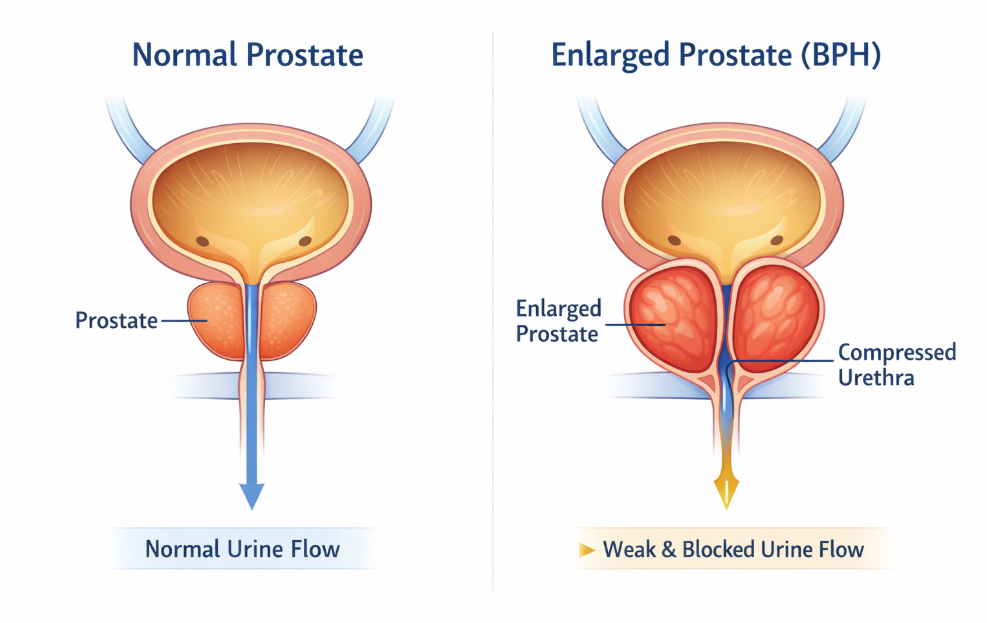
An enlarged prostate can disrupt normal urinary function and, in some cases, significantly affect quality of life.
Urinary obstruction may lead to:
- Incomplete bladder emptying
- Increased bladder pressure
- Recurrent urinary tract infections
- Blood in the urine (hematuria)
Symptoms of Enlarged Prostate (BPH)
Symptoms vary between individuals but commonly include:
- Difficulty urinating
- Weak or interrupted urine stream
- Frequent urination during the day
- Nocturia (waking up at night to urinate)
- Urgency to urinate
- Feeling of incomplete bladder emptying
- Difficulty starting urination
- Inability to urinate in advanced cases
- Blood in the urine
- Prostate-related bleeding
Prostate Embolization (PAE): Advanced Non-Surgical Treatment
Prostatic Artery Embolization (PAE) is a minimally invasive, non-surgical procedure that reduces blood flow to the prostate. This leads to gradual shrinkage of the gland and significant improvement in urinary symptoms.
Struggling with Urinary Symptoms?
If you’re experiencing difficulty urinating or waking up frequently at night, it may be time to explore a modern, non-surgical solution.
Contact us today to find out if PAE is right for you >>
