

In brief
Infant hemangiomas are common benign vascular growths that usually appear within the first weeks of life and often resolve naturally over time. However, when a hemangioma grows rapidly, bleeds, or affects sensitive areas such as the eyes, face, or airway, early medical evaluation is essential.
What Is a Hemangioma?
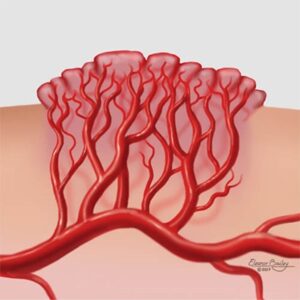
A hemangioma is a benign (non-cancerous) growth made up of blood vessels. It is one of the most common tumors in infancy.
It typically appears within the first weeks after birth and may look like a red patch or a raised pinkish-red lesion on the skin. Some hemangiomas are superficial, while others are deeper under the skin.
Is Hemangioma Dangerous?
In most cases – no.
Most hemangiomas:
- Grow during the first year of life
- Stop growing afterward
- Gradually shrink over time
- Do not cause permanent damage
Because of this natural course, many cases only require monitoring.
When Should You See a Doctor?
Medical evaluation is recommended if:
- The hemangioma is growing rapidly
- An open wound (ulcer) develops
- There is repeated bleeding
- The lesion is near the eye and affects vision
- There are signs of breathing or feeding difficulties
- Multiple large lesions are present
- The hemangioma is located in a sensitive area such as the face or neck
Early evaluation helps prevent complications and ensures proper care.
How Is Hemangioma Diagnosed?
Diagnosis is usually based on clinical examination, but may include imaging when needed:
- Ultrasound (Doppler)
- MRI for complex cases
- Monitoring growth patterns over time
Accurate diagnosis helps determine whether treatment is necessary.
Treatment Options
Observation
Most hemangiomas do not require active treatment—only regular follow-up.
Medical Therapy
In certain cases:
- Medications can help slow growth and reduce the size of the lesion
- Minimally Invasive Vascular Treatment
When complications occur or medical therapy is not sufficient, minimally invasive treatment may be considered.
This approach:
- Reduces blood flow to the lesion
- Shrinks it in a controlled way
- Avoids open surgery
Surgical Treatment
In selected cases, surgery may be performed by a pediatric or plastic surgeon.
Will There Be a Scar?
In most cases – no.
However, larger hemangiomas or those with complications (such as ulceration) may leave mild skin texture or color changes.
Summary
Hemangiomas in infants and children are usually harmless and resolve naturally over time.
However, rapid growth, bleeding, or sensitive location requires early medical evaluation.
Accurate diagnosis and professional follow-up help prevent complications and ensure the best possible outcome.
Concerned about your child’s hemangioma? Schedule a professional consultation and receive a clear diagnosis and personalized treatment plan.
